A children’s vitamin is supposed to be the simple, trustworthy part of the day. Yet the ingredient lists on many popular gummies include additives that exist purely for appearance, not nutrition.
Titanium dioxide
Titanium dioxide (TiO₂) is a white pigment used to make coatings and gummies look opaque and bright. It adds nothing nutritional. In 2022 the European Food Safety Authority concluded that titanium dioxide could no longer be considered safe as a food additive, citing an inability to rule out genotoxicity concerns, and the European Union subsequently banned it from food. U.S. regulation still permits it, which is why it remains common in American products. Given that it serves only a cosmetic purpose, leaving it out costs the formulation nothing.
Synthetic dyes
Bright, candy-colored gummies often get their color from petroleum-derived dyes such as Red 40, Yellow 5, and Blue 1. The research on behavior is genuinely mixed and far from settled, but enough signal exists that California passed legislation restricting several synthetic dyes in foods served at public schools, and manufacturers increasingly offer dye-free lines. Natural alternatives, color from fruit and vegetable concentrates, are well established and widely available.
The simpler standard
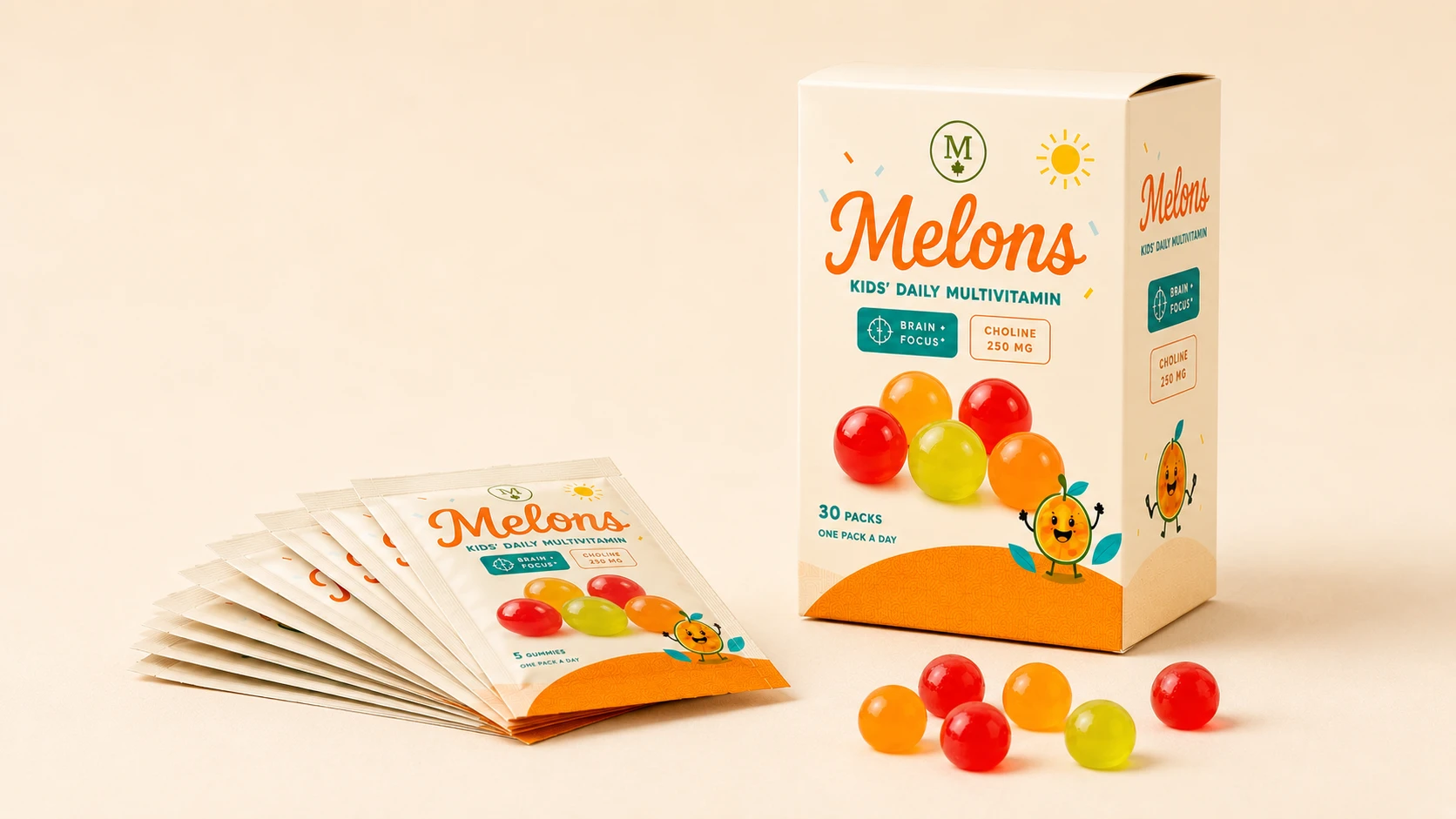
The pattern with both additives is the same: they make a product look more appealing on a shelf while adding nothing a parent actually wants their child to eat. A clean formulation applies a straightforward rule, that every ingredient should earn its place by doing something useful. Melons uses no titanium dioxide and no synthetic dyes; color comes from real fruit and vegetable sources.
What to look for
On any label, scan past the vitamins to the “other ingredients” line and watch for:
- Titanium dioxide (sometimes listed as a color or coating)
- Artificial colors named by number (Red 40, Yellow 5, Yellow 6, Blue 1)
- Added sugar high in the ingredient order
The shorter and more recognizable that bottom section, the better.
This article is for general education and is not medical advice. Dietary supplements are not intended to diagnose, treat, cure, or prevent any disease. Talk to your pediatrician about your child’s individual needs.
References
- European Food Safety Authority. Safety assessment of titanium dioxide (E171) as a food additive, 2021.
- California Office of Environmental Health Hazard Assessment. Health effects assessment of synthetic food dyes, 2021.
- U.S. Food and Drug Administration. Color Additives in Foods.